
Dogs too big for a carrier pay a fare on TGV INOUI and Intercités trains and must wear a muzzle for the whole journey, restaurants and hotels can each decide whether to let dogs in, and many seaside towns ban dogs from the beach in summer. Before you head home, a French vet must give and record a tapeworm treatment 24 to 120 hours before you arrive in Great Britain.
Dog rules last checked . How we check
The paperwork rules live on one page, so they're always current: pet passports and the animal health certificate.
Stopping overnight near the crossing#
Hotels near Calais for the night before or after the crossing. Check each one's pet policy before you book.
Check hotel prices near CalaisWe may earn a commission if you book through these links. How we make money
Paperwork in brief#
France follows the EU rules for dogs coming from Great Britain, so your dog needs a new animal health certificate for each trip, a microchip and an in-date rabies vaccination. EU pet passports no longer work for GB residents entering the EU. Our pet passport guide sets out every step, timing and exception in one place.
Getting across the Channel#
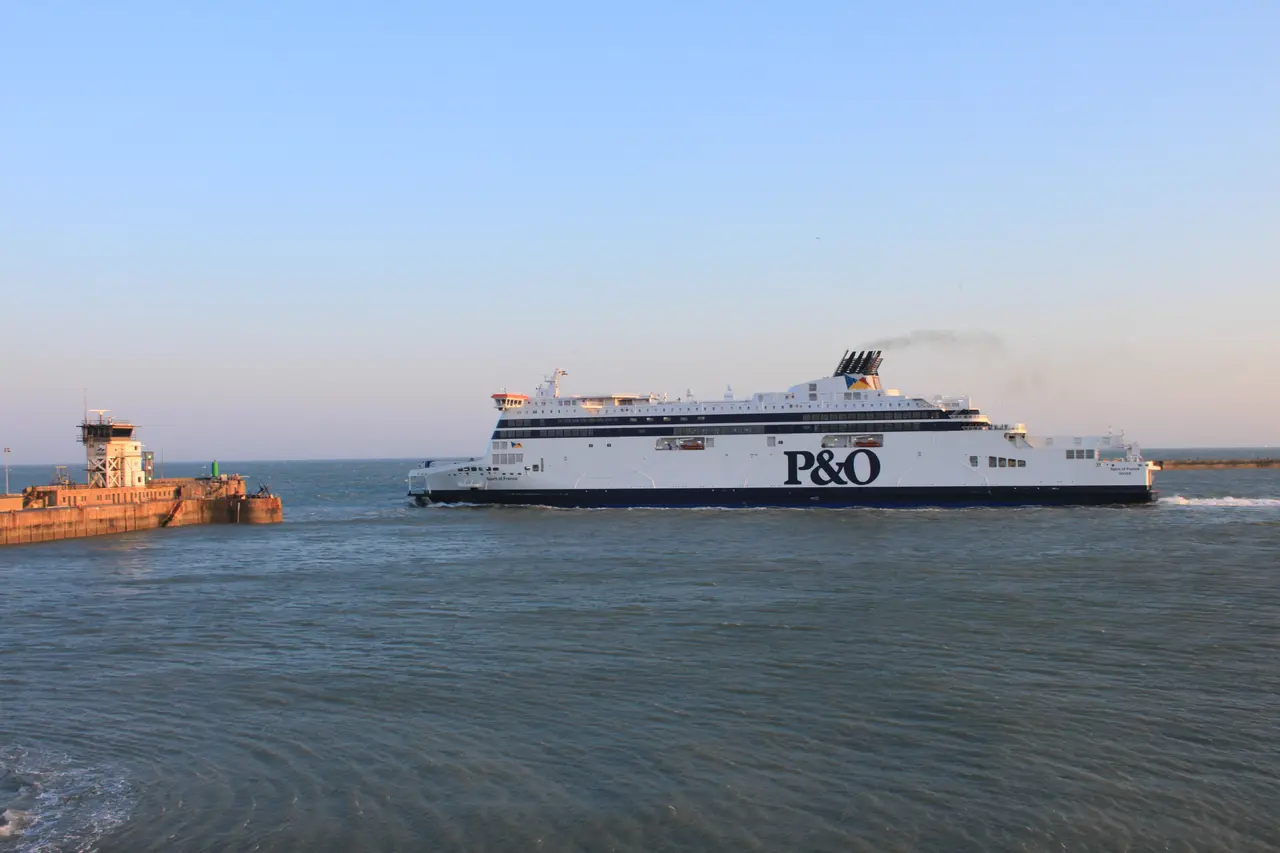
To come back into Great Britain with a dog you must use an approved route, and France has more of them than anywhere else: ferries from Calais, Dunkerque, Dieppe, Le Havre, Caen, Cherbourg, Roscoff and St Malo, and the Channel Tunnel shuttle from Coquelles near Calais. Some carry restrictions, such as Le Havre being for vehicle passengers only and one St Malo route running in winter only. Where the dog travels on each crossing, what it costs and how check-in works are in our crossings guide.
Need somewhere to stop with the dog? Find dog-friendly stays near Calais
Want mobile data abroad without roaming charges? Compare travel eSIMs before you go. Compare travel eSIMs



Dogs on French trains#
On TGV INOUI and Intercités day trains, a small pet travels in a closed bag or basket no larger than 45 by 30 by 25 cm, on your lap or at your feet. A dog too big for that travels at your feet on a lead and must be muzzled for the entire journey. SNCF charges a flat fare of 10 euros for either, at its fares from 2 January 2026.
SNCF's conditions add that pets other than assistance dogs are allowed provided other passengers do not object, so be ready to move if someone near you does. Guide and assistance dogs travel free and need no ticket on every SNCF train, and they are the only dogs allowed on replacement coaches.
Regional TER trains set their own rules by region. In Hauts-de-France, the region around Calais and Dunkerque, a small pet in a carrier travels free on a zero-fare ticket, and a larger dog pays half the standard fare up to a cap. Normandy charges one flat fee for any animal. On Intercités night trains, pets can go in seated carriages for a fee, but not in sleeper compartments unless you book the whole compartment.
Once across the Channel, trains and coaches between towns can be booked in English. Search trains and coaches
Dogs in restaurants, cafes and hotels#
There is no national rule that lets dogs into French restaurants. The French consumer authority states that a restaurant does not have to accept animals, and one that does can require them to stay on a lead in the dining room. Guide and assistance dogs are the exception: they cannot be turned away.
Hotels are in the same position. The authority says hoteliers may refuse pets and advises asking when you book, rather than on arrival. One cafe or hotel letting dogs in doesn't mean the next will, so check each place's own policy before you go in.
Beaches, woods and walks#
Beach rules in France are set town by town. A mayor can ban dogs from particular places even when they are on a lead, and some resorts ban dogs from the sand for the whole summer. La Baule in southern Brittany is a typical example: its own page says dogs are not allowed on the beach from 15 June to 15 September. Look for the signs at beach entrances or the commune's own website before you let the dog on the sand.
In woods and forests, a national rule applies from 15 April to 30 June: dogs off the lead are banned away from the forest paths, to protect birds and game. A dog more than 100 metres from its owner, or out of recall range, counts as straying. National parks and public gardens can have their own bans, posted at the entrance.
Category 1 and 2 dogs#
France puts some dogs into two legal categories. Category 1 covers dogs without a recognised pedigree that look like American Staffordshire terriers or Staffordshire terriers (the pit bull type), mastiffs (boerbull type) or Tosas. Category 2 covers pedigree American Staffordshire terriers, Rottweilers and Tosas, plus dogs that look like Rottweilers without a pedigree. Only a vet can judge which type a dog is.
Bringing a category 1 dog into mainland France is a criminal offence, so a dog that falls into that group should not make the trip. Category 2 dogs can travel, but in public places, on public transport and in any premises open to the public they must be muzzled and on a lead held by an adult, and a minor cannot keep one.
French owners of both categories also need a permit, insurance and a behaviour assessment. The official guidance does not say how these apply to visitors on holiday, so if your dog might be category 2, contact the town hall where you are staying before you go.
The vet visit before you come home#
Every dog returning to Great Britain from France needs a tapeworm treatment given by a vet no less than 24 hours and no more than 120 hours before you arrive, recorded on the animal health certificate or passport. On a longer stay, that means booking a French vet for one of your last few days. A treatment outside the window can mean the dog is refused entry or put into quarantine.
To find a practice, the French veterinary council, the Ordre national des vétérinaires, runs a public directory of vets. Pick a vet in a town you will be in one or two days before your crossing, ring ahead, and take the certificate with you so the treatment can be written in.
Where to get the tapeworm treatment before coming home#
Calais
Near Calais ferry port and the Channel Tunnel terminal at Coquelles
Ferries sail to Dover and the tunnel shuttle runs to Folkestone. A treatment here needs to be at least 24 hours before you arrive in Great Britain, so it suits a last night or two nearby rather than a stop on the way to the terminal.
Dunkerque
Near Dunkerque ferry port, for Dover
Has its own approved ferry route to Dover. Handy if you are coming home from Belgium or northern France and want to see the vet in your last French town.
Caen
Near Caen ferry port (Ouistreham), for Portsmouth
The approved route to Portsmouth sails from Caen. Book the appointment for a day or two before the sailing, and take the certificate so the vet can record the treatment in it.
Cherbourg
Near Cherbourg ferry port, for Portsmouth, Poole and Plymouth
Approved routes run to three English ports from here. Allow for the 24-hour minimum if Cherbourg is your last stop before sailing.
St Malo
Near St Malo ferry port, for Portsmouth, Poole and Plymouth
Sailings run to Portsmouth and Poole, with Plymouth in winter only. Spend your last day or two in Brittany here and see the vet before you sail.
Quick answers
- Do dogs need a muzzle on French trains?
- On TGV INOUI and Intercités day trains, yes for any dog travelling on a lead: it must be muzzled for the whole journey. A small pet travelling in a closed carrier does not need one.
- How much does it cost to take a dog on a TGV?
- SNCF charges a flat 10 euros for a pet on TGV INOUI and Intercités day trains, whether it travels in a carrier or on a lead. Regional TER fares vary by region.
- Are dogs allowed in French restaurants?
- Only if the restaurant agrees. French law lets each restaurant decide, and one that accepts dogs can insist they stay on a lead. Guide and assistance dogs cannot be refused.
- Can I take my dog on French beaches?
- It depends on the town. Mayors set beach rules, and many resorts ban dogs in summer; La Baule, for example, bans them from 15 June to 15 September. Check the signs or the town's own website.
- Can I take a Rottweiler to France?
- Yes, but a pedigree Rottweiler is a category 2 dog in France, so it must be muzzled and on a lead held by an adult in public places, on public transport and inside premises open to the public.
- Where do I get the tapeworm treatment in France?
- At any French vet, 24 to 120 hours before you arrive back in Great Britain. The French veterinary council's online directory lists practices; book one in a town you will be in a day or two before your crossing.
- Do dogs have to be on a lead in French forests?
- From 15 April to 30 June, dogs must be on a lead away from forest paths. All year, a dog more than 100 metres from its owner counts as straying.